
How to Identify a Failed IGU (Insulated Glass Unit) & When to Replace It
Introduction
If you manage commercial properties in Denver or across the Colorado Front Range, you've likely noticed something unsettling: a commercial window that looks foggy, or worse, has visible condensation trapped inside the glass panes. That's not a cleaning problem—that's a failed insulated glass unit (IGU), and it's more common than you might think.
A failed IGU is one of the most common commercial glass problems we see, and it's one that property managers often don't catch until it becomes a visible issue. The problem? Once you see the failure, your building's thermal performance is already suffering—along with your heating and cooling bills.
In this guide, I'll walk you through exactly what an IGU is, how to spot when one has failed, why it matters for your building, and what your replacement options are. By the end, you'll know whether you need to act immediately or can plan a repair for the next maintenance cycle.
What Is an Insulated Glass Unit (IGU)?
Before we talk about failure, let's understand what we're dealing with.
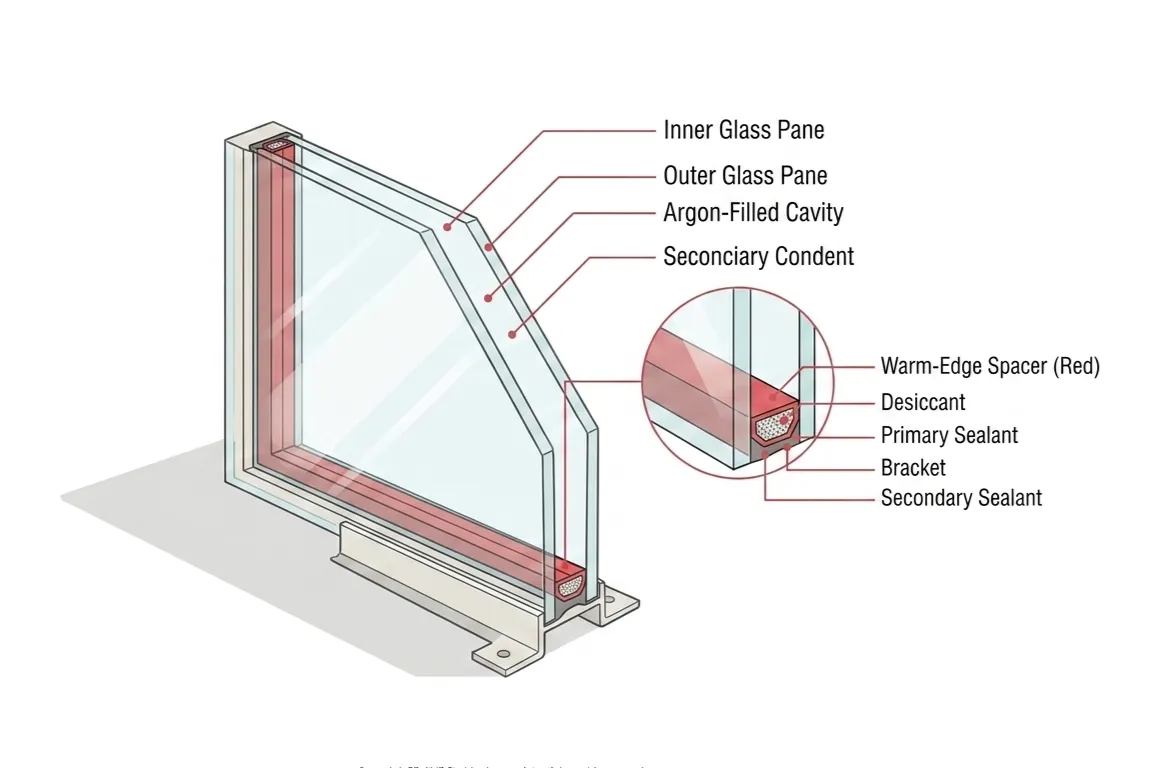
An insulated glass unit (IGU) is the heart of modern commercial windows. According to the National Fenestration Rating Council (NFRC), an IGU is a sealed assembly made of:
- Two or more glass panes (typically separated by ½ to ¾ inch of space)
- A spacer frame (usually aluminum or warm-edge material) that holds the panes apart
- A hermetic seal (an airtight seal that keeps the space between panes sealed and dry)
- Desiccant (a moisture-absorbing material inside the spacer) that keeps the air between panes completely dry
The magic of an IGU is that the trapped air between the panes provides insulation. That sealed, dry space is what gives modern commercial windows their thermal performance. When the seal fails, all of that performance goes away—fast.
Why IGUs Are Used in Commercial Buildings
Commercial property managers choose IGUs because they:
- Provide better insulation than single-pane windows (R-value 2-4 vs. R-value 1 for single pane)
- Reduce outside noise transmission
- Improve occupant comfort (less drafting around windows)
- Meet modern energy codes (critical in Colorado)
- Reduce heating/cooling costs (30-40% savings vs. old single-pane windows)
According to the U.S. Department of Energy, proper window insulation can account for 10-15% of a building's total heat loss or gain. In other words: An IGU failure doesn't just mean a cosmetic problem. It means you're losing significant energy efficiency.
Signs of a Failed IGU: How to Spot the Problem
A failed IGU doesn't always announce itself loudly. But if you know what to look for, you can catch it early.
Sign #1: Visible Condensation Between the Panes
This is the most obvious sign. If you can see condensation, fog, or moisture inside the glass (not on the surface), the seal has failed.
What's happening: The desiccant inside the sealed space has become saturated with moisture, meaning the seal is compromised. Air and moisture are now getting into the space that's supposed to be sealed and dry.
Why it matters: This is a permanent condition. Once you see condensation between panes, the IGU cannot be restored—it must be replaced. The condensation will also eventually lead to mineral deposits and calcium buildup on the glass, which makes it even more unsightly.
Timeline: If you see this now, plan for replacement within 6-12 months (not an emergency, but plan ahead).
Sign #2: Visible Discoloration or Haze on the Interior Glass Surface
Sometimes you won't see condensation, but you'll notice the glass looks slightly hazy or discolored on the inside surface, even on a clear day.
What's happening: Moisture vapor is being absorbed into the spacer frame or reacting with the coating on the glass. This is an early warning sign that the seal is degrading.
Why it matters: If you catch this early, you might be able to slow the process by improving ventilation around the windows. But this is still a sign that replacement is coming.
Timeline: 12-24 months before the problem becomes severe. This is a good time to plan your window replacement budget.
Sign #3: Drafting or Air Leaks Around the Window Frame
If you feel air movement around the window frame on a windy day, it could indicate a failed seal. The window frame itself might be separating from the building, or the gaskets around the unit are degraded.
What's happening: The seal around the frame (not the IGU itself) is leaking, allowing outside air to infiltrate the building.
Why it matters: This is a thermal loss issue. You're losing conditioned air and paying for heating/cooling that's escaping through gaps.
Timeline: Immediate concern if significant air infiltration is happening. Prioritize sealing or replacing the window.
Sign #4: Difficulty Opening or Closing Windows (Operational Frames)
If your commercial building has operational windows (ones that open), a failed IGU might cause the sash to stick or move stiffly.
What's happening: Moisture entering the window frame has caused the frame material to swell or warp. Or, the weight of accumulated condensation is putting stress on the frame.
Why it matters: This is a safety and operational issue. Difficulty operating windows can be a code violation for emergency exits or ventilation requirements.
Timeline: If windows won't operate properly, this is a priority repair—either repair the sash/frame or replace the IGU.
Sign #5: Reduced Thermal Performance (Energy Bills Climbing)
This one's harder to spot directly, but if your heating or cooling bills have climbed significantly, failed IGUs might be the culprit.
What's happening: The air between the panes is no longer completely dry and sealed. This reduces the insulating R-value significantly. You're now paying to heat or cool more of the building's exterior.
Why it matters: A building with 50% failed IGUs can see 10-20% increases in utility costs. Over a year, that's thousands of dollars in wasted energy costs.
Timeline: Ongoing problem that gets worse over time. But a good reason to prioritize IGU replacement over time.
Quick Diagnostic: Compare your utility bills from last year (same season). If heating/cooling costs are up 10%+ with no other explanation, failed windows could be the reason.
Why IGUs Fail: Understanding the Causes
Understanding why an IGU fails helps you prevent it from happening again.
Cause #1: Age and Material Degradation (Most Common)
According to research from the Insulating Glass Manufacturers Association (IGMA), IGUs have an expected lifespan of 10-20 years, depending on climate and installation quality.
What happens: The sealant that creates the hermetic seal naturally degrades over time. In Colorado's high-altitude, dry climate, the temperature swings and UV exposure accelerate this process. The desiccant inside eventually becomes saturated and stops absorbing moisture.
Prevention: Nothing prevents natural aging, but proper maintenance (regular cleaning, proper ventilation) can extend IGU life.
Cause #2: Poor Installation
If an IGU is installed incorrectly, it can fail much sooner than expected.
What happens: Gaps in the seal, improper spacing between panes, or damage during installation can compromise the unit right away. The problem might not show up for 2-3 years, but the damage was done on day one.
Prevention: Always use certified, experienced glaziers. The FGIA publishes guidelines for proper window installation that should be followed.
Cause #3: Environmental Stress
Extreme temperature swings cause the glass and frame materials to expand and contract at different rates.
What happens: In Colorado, winter temperatures can drop to -10°F while summer can exceed 90°F. This constant expansion/contraction puts stress on the seal. The spacer frame cracks slightly, and moisture starts infiltrating.
Prevention: Proper frame sealing and high-quality sealants can minimize this. Some newer IGU designs use warm-edge spacers (as described in ASTM E2190 standards) that expand and contract less, reducing stress on the seal.
Cause #4: Manufacturing Defects
Sometimes, an IGU simply has a manufacturing defect—the seal wasn't applied correctly at the factory, or the desiccant wasn't properly inserted.
What happens: These units can fail within 5-10 years, sometimes sooner. They often fail in clusters if multiple windows were manufactured in the same batch.
Prevention: This isn't something you can prevent, but if multiple IGUs fail at the same time, it might indicate a manufacturing batch issue. Report this to your glazing contractor—you might have a warranty claim.
What to Do When You Spot a Failed IGU
Found a failed IGU? Here's your action plan.
Step 1: Document the Problem
- Take photos of the condensation, haze, or other visible signs
- Note the location (which window, which floor, which direction it faces)
- Check your records for when the window was installed (if you have that data)
- Note when you first noticed it (helps determine how fast it's progressing)
This documentation helps your glazing contractor assess the problem and determine the best solution.
Step 2: Assess Your Options
You have three main options:
Option A: Replace Just the IGU (Least Expensive)
If the window frame itself is in good condition, you can replace just the insulated glass unit, keeping the existing frame.
- Cost: $200-600 per unit (depending on size and glass type)
- Timeline: 1-3 days for a typical building
- Best for: Newer buildings (within last 15 years) with solid frames
- Downside: If the frame is also aging, you'll be replacing the IGU again in another 10-15 years
Option B: Replace the Entire Window Assembly (Moderate Cost)
Replace the IGU and the frame system (which might include the sash, frame, and trim).
- Cost: $500-1,500 per window (depending on window type and size)
- Timeline: 3-7 days per window
- Best for: Buildings with aging frames (15+ years old) or frames showing damage
- Upside: You get a complete solution; new frames often have better seals and insulation
- Downside: More expensive upfront, but longer lifespan (20-25 years)
Option C: Install a Secondary Window System (Least Disruptive)
Add a secondary window pane on the interior, creating a new insulated assembly without removing the original window. This approach is often recommended for historic buildings.
- Cost: $300-800 per window
- Timeline: 1-2 days per window
- Best for: Historic buildings where original windows can't be replaced, or buildings needing quick solutions
- Upside: Minimal disruption, can be done on occupied buildings without shutting down spaces
- Downside: Doesn't solve the original problem (which will still be visible), takes up more interior wall space
Step 3: Decide on Timing
Urgent Action (Next 1-4 weeks):
- Significant air infiltration or drafting
- Windows that won't operate (safety/code issue)
- Multiple IGUs failing in the same area (potential structural issue)
Plan for Next Maintenance Cycle (Next 6-12 months):
- Visible condensation but no other issues
- Haze/discoloration on interior surface
- Rising energy costs (could indicate failing IGUs)
- Building is 10-15 years old and windows are showing age
Not Urgent (12+ months out):
- Early signs of degradation (minor haze)
- Building is relatively new (less than 10 years)
- Window is isolated (only one or two failing)
Step 4: Get Professional Assessment
Don't guess—call a professional glazing contractor. Here's what to expect:
What they'll do:
- Inspect the window from outside and inside
- Check for air leaks around the frame
- Assess frame condition
- Look for moisture patterns (indicates how fast the failure is progressing)
- Recommend IGU replacement, full window replacement, or secondary system
What to ask them:
- "How soon does this need to be replaced?"
- "Can we replace just the IGU, or does the frame need replacement?"
- "What's the warranty on your replacement unit?"
- "Will this affect building operations or tenants?" (Important if it's occupied)
- "Do you have insurance and certifications?" (Non-negotiable for commercial work)
The Cost of Waiting: Why You Shouldn't Ignore Failed IGUs
Ignoring a failed IGU might seem like a way to save money, but it costs you:
Energy Waste
A failed IGU loses 50-70% of its insulating value. If 20% of your windows have failed IGUs, you're wasting 10-14% of your heating/cooling budget every month. The Lawrence Berkeley National Laboratory has published research showing the significant impact of window degradation on building energy consumption.
Example: A 50,000 sq ft office building spends ~$80,000/year on heating and cooling. With 20% failed IGUs, that's an extra $8,000-11,000/year in wasted energy costs.
Over 3 years: $24,000-33,000 in unnecessary utility expenses.
Compare to replacement cost: Replacing those windows would cost $15,000-30,000 but save you money within 2-3 years. It's an investment that pays for itself.
Tenant Comfort & Retention
Visible condensation in windows looks unprofessional and makes tenants uncomfortable. It signals that building maintenance is being deferred.
For office buildings: Tenants notice fogged windows and assume the building is run-down. This affects tenant satisfaction and lease renewal rates.
For retail/hospitality: Fogged windows are an eyesore. Customers judge your business by how well-maintained the space looks.
Mold & Water Damage Risk
Chronic moisture from failed IGUs can lead to:
- Mold growth on interior window sills
- Damage to window frames and surrounding wall materials
- Water stains on interior finishes (affecting aesthetics and insulation)
Once mold appears, remediation is expensive ($5,000-20,000 depending on extent).
Code Compliance & Building Performance
Modern Colorado energy codes require buildings to maintain certain insulation standards. If a significant portion of your windows have failed IGUs, your building might not be code-compliant.
For reference, the Colorado Code Council maintains the state's building codes, which are based on the International Energy Conservation Code (IECC).
If selling the building: Inspectors will flag failed IGUs. Buyers will demand repairs before closing, reducing your sale price.
What Element 13 Facades Recommends
We've replaced thousands of IGUs across Denver and the Colorado Front Range—from small storefronts to large office buildings. Here's what we've learned:
If you're seeing visible condensation: Don't wait. Plan for replacement within the next 6-12 months. The sooner you replace it, the sooner you stop wasting energy.
If you're seeing early signs (haze, minor drafting): Get a professional assessment within 3-6 months. Early detection helps you budget properly.
If your building is 15+ years old: Have a professional window audit done. You might be able to catch failures before they become visible, saving money and avoiding tenant disruption.
For the replacement itself: We recommend:
- For newer buildings (< 10 years): Replace just the IGU, keep the frame (most cost-effective)
- For aging buildings (15+ years): Consider full window replacement for a 20+ year lifespan and better performance
- For occupied buildings: Secondary window systems minimize disruption while improving thermal performance
The most important thing? Don't delay. Failed IGUs don't improve with time. The longer you wait, the more energy you waste and the higher your utility bills climb.
Frequently Asked Questions
No. The condensation is between the glass panes, not on the surface. You can't clean it out without breaking the seal (and the glass). The only solution is replacement.
It depends on size, glass type, quantity, and accessibility. Standard clear glass: $200-300. Specialty glass (tinted, low-E, safety-rated): $400-800. Ballpark: $200-600 per unit for IGU only; $500-1,500 per window for full replacement.
Yes. Most commercial glazing contractors offer product warranty (10-15 years for manufacturing defects) and workmanship warranty (2-5 years for installation issues).
Significantly, yes. Modern, energy-efficient units provide 30-40% reduction in heating/cooling costs compared to single-pane or very old windows, improved occupant comfort, and potential tax credits.
If you're seeing 5+ failures, this could indicate age-related failure (15+ year old building), manufacturing batch defect, or installation issue. Get a professional audit to create a prioritized replacement plan.
When Glass Door Problems Can't Wait Contact Element13
Your building's glass front entrance doors handle hundreds of entries daily. When they fail, have cracked glass, broken closers, or hardware that won't engage, it's not just inconvenient, it's a security risk. Property managers and general contractors know that entrance problems reflect poorly on the entire building and create liability concerns.